Go Convenience store Ready
- 3.3
- Rating
- 10.00M
- Installs
- Free
- Price

 Analysis by App-foxy
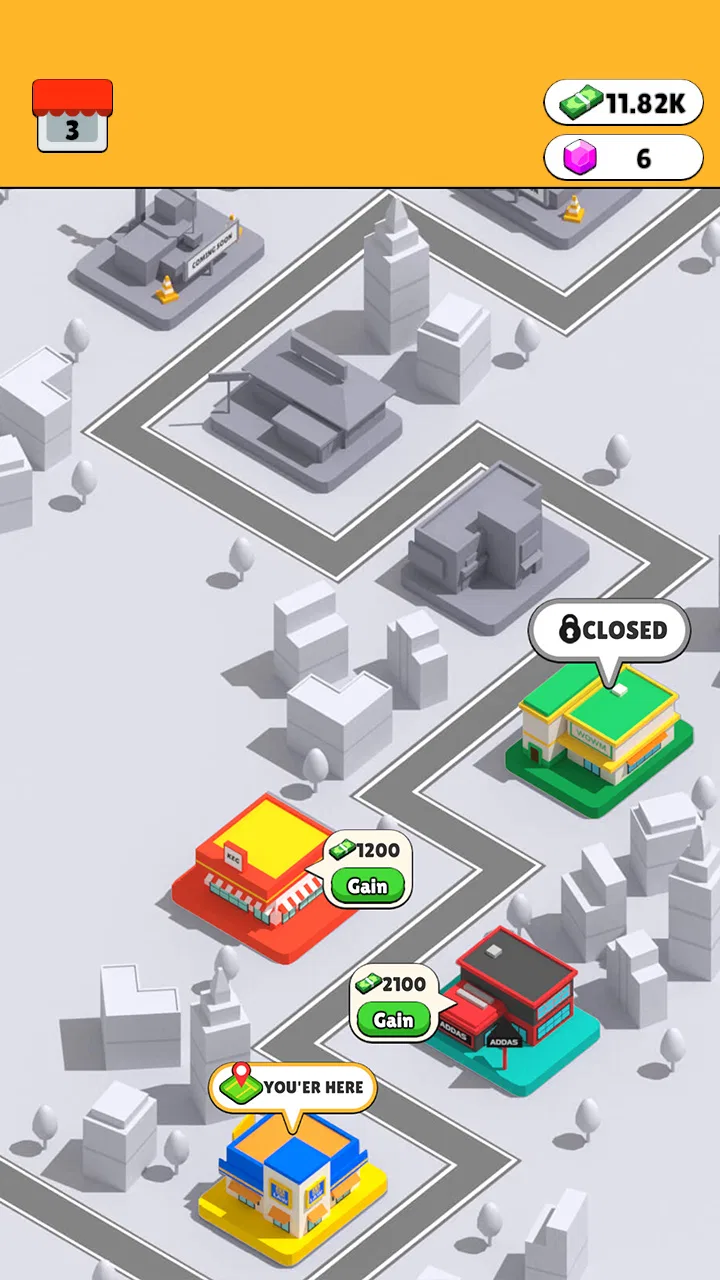
I spent my first sessions with Go Convenience store Ready expecting a very light casual game, and that is exactly where it makes its best first impression. It presents itself as a relaxed simulation experience from zame, built around the simple pleasure of handling a convenience-store setting rather than demanding fast reactions or complicated planning. The idea is easy to understand, the tone is approachable, and I could begin playing without studying a long tutorial or learning a dense set of rules.
That simplicity is also the central question surrounding the game: does the pleasant routine remain interesting once the novelty wears off? My answer is mixed but useful. I found it easy to pick up during short breaks, especially when I wanted something gentler than a competitive game. However, its lasting value depends heavily on whether you enjoy repeating small management tasks and gradually improving a familiar routine. Players looking for deep simulation may outgrow it, while anyone who likes uncomplicated shop-themed play may find a comfortable casual companion.
From an easy first week to a more demanding routine
I found that the game’s appeal can change once the opening novelty gives way to a familiar routine. In this section, I’ll look at how to tell whether that shift is a welcome comfort or a sign that the experience has become too predictable, then consider what makes a more demanding routine worthwhile.
You May Also Like

 Google Keep - Notes and lists
Google Keep’s Quiet Growth Shows the Appeal of Simpler Notes
As mobile work gets busier, Google Keep keeps winning a simple contest: capture a thought quickly, find it later, and get on with the day.

 Blood Strike: 2.5 Anniversary
Blood Strike’s Loadouts Turn Every Drop Into a Tactical Gamble
A close look at Blood Strike’s custom loadouts: how fast access to signature weapons reshapes its battle royale rhythm, rewards preparation, and narrows the gap between fights.

 Pandora - Music & Podcasts
Pandora’s Music Is Easy to Start, but Harder to Recover
Pandora’s strength is its low-effort path from a seed to a station. Its weak spot is how much confidence it asks you to place in connection, setup, and quiet recovery.

 8 Ball Pool
 Is Built on Rivalries, Rematches, and Routine
A close look at the rivalries, rematches, shared routines, and unanswered safety questions that turn a quick pool match into a persistent mobile community.

 Samsung Music
’s Quiet Strength Is Playing What You Already Own
Its reach comes less from spectacle than from dependable access to a personal library. That simplicity is both the app’s strongest retention engine and its ceiling.

 AccuWeather: Weather Radar
AccuWeather Review: A Quick, Clear Forecast for Everyday Decisions
For everyday plans, the best forecast is the one you can understand quickly. AccuWeather makes rain timing, radar, and local conditions easy to act on, with a few trade-offs.
More From Our News Desk



Why the opening sessions feel welcoming
The first-week appeal comes from the low barrier to entry. The game belongs to the casual category, and it behaves like one: I never felt pushed to memorize complicated systems before I could enjoy the basic loop. That makes it suitable for a quick evening session, a commute, or a few spare minutes while waiting for an appointment. The store summary describes leisure-focused simulation games, and that is a fair way to understand the mood. This is not a game I would choose when I want pressure or a dramatic challenge.
The convenience-store theme gives the routine a recognizable shape. Even without relying on elaborate storytelling, the setting makes ordinary actions feel purposeful. A small improvement or completed task can feel satisfying because it contributes to the idea of keeping a shop functioning. That familiarity helps the game communicate its intentions quickly. I did not need to treat every screen as a puzzle; I could simply settle into the rhythm and see whether the activity suited me.
Another strength is its accessibility. It is free to start, carries an Everyone content rating, and runs on Android devices using version 8.0 or later. Those details make it a practical recommendation for families and for players using an older phone that cannot handle more demanding three-dimensional games. I would still check the device experience personally, because an operating-system requirement does not automatically mean every older handset will feel equally smooth, but the entry point is broad.
The first useful habit is learning your own stopping point
One lesson I noticed early is that the game works better when treated as a short routine rather than an endless appointment. It is tempting to continue simply because the next small action is available, yet the relaxed design does not always create a strong reason to stay for a long uninterrupted session. I enjoyed it more when I decided in advance to complete a modest task and stop. That approach keeps the shop theme pleasant instead of turning it into another obligation on my phone.
For a realistic everyday example, I could see someone opening it after lunch, spending a few minutes organizing the current activity, and closing it before returning to work. The same player might use it in the evening as a low-stress wind-down game, especially when a competitive match or story-heavy adventure would demand too much attention. The important point is that the game fits around the player’s schedule better than many alternatives, but it may not create a compelling reason to rearrange that schedule.
What makes the novelty fade
The convenience-store premise is immediately understandable, but familiarity can become repetition. During the opening period, even small interactions benefit from the charm of discovery. Later, I found myself judging the game less by its theme and more by the quality of its recurring loop. If the basic shop routine already appeals to you, this transition may feel comfortable. If you need frequent surprises, rich narrative developments, or increasingly complex decisions, the same transition can feel like the point where interest starts to decline.
This is where it differs from deeper management games. Traditional store simulators often reward long-term planning through detailed inventories, staffing choices, layouts, or economic systems. A more action-oriented casual title may offer constant movement and quick feedback instead. Go Convenience store Ready sits closer to the relaxed end of that spectrum. Its advantage is that it asks less from me; its weakness is that it may give me fewer reasons to rethink my strategy after the initial learning period.
How I would approach the first month
After the first week, I would not recommend trying to force a daily streak unless the routine genuinely feels enjoyable. A better approach is to use it as a flexible filler game. Open it when you want a small simulation task, then leave it alone when the activity begins to feel automatic. This prevents the common problem of turning a leisure game into a checklist.
I would also advise new players to pay attention to what they actually enjoy: the shop atmosphere, the sense of completion, or the progression from one task to the next. That distinction matters. If the pleasure comes mainly from discovering the premise, the game may be best as a brief novelty. If you enjoy repeating a familiar process and watching it develop, it has a better chance of staying installed.
Where recurring value can come from
The month-to-month value is not likely to come from constant reinvention. Instead, it comes from whether the routine remains a pleasant mental reset. I found the strongest use case in short, self-contained sessions. The game does not need to replace a major hobby to be worthwhile; it can earn space by being easy to open and easy to leave. That is a modest form of value, but it is real for players who want something calmer than the usual stream of notifications and competitive challenges.
Its audience size suggests that this format has broad appeal: the game has passed five million installs, while its average rating is around 3.3 from roughly 2.8 thousand ratings. I would read that combination carefully. It indicates substantial curiosity and reach, but the rating also suggests that many players may find the experience uneven or not quite as engaging as they hoped. I would not install it solely because it is popular; I would install it because the specific idea of a relaxed convenience-store simulation sounds appealing.
The review count is around a hundred, which is another reason I would treat public reaction as a signal rather than a final judgment. Casual games can divide players for simple reasons: one person enjoys the repetition, while another sees the same repetition as a lack of depth. My own experience landed between those views. I could appreciate the calm structure, but I would not claim that it offers the strategic range of a full management simulator.
The practical question of in-app purchases
The game is free, but optional in-app purchases range from about three dollars to around ten dollars per item. That changes how I would recommend approaching it. I would begin without spending anything and first decide whether the ordinary loop has earned a place in my routine. Paying to accelerate a game that already feels repetitive would not solve the central issue; it could simply make the content disappear faster.
For a player who enjoys the theme and expects to keep returning, a purchase may feel more reasonable if it directly improves convenience or supports continued play. I would still set a personal limit before buying, particularly if the game becomes part of a child’s device use. The Everyone rating makes it broadly accessible, but age suitability does not remove the need for sensible spending habits. Free entry is a benefit, not a promise that every optional purchase will be worthwhile for every player.
Maintenance: low effort, but not completely frictionless
The maintenance burden is relatively light in the sense that the game is easy to understand again after a break. I did not feel that I needed to rebuild a complicated mental model every time I returned. That is valuable for a casual title because many mobile games punish absence by making the player feel lost or behind. Here, the relaxed format is more forgiving as a general experience.
Still, low complexity can create its own maintenance problem. A game that asks little from me also has to provide enough freshness to justify repeated visits. If the available routine starts to feel like a chore, there may be no deeper layer waiting to pull me back. I would describe the maintenance as emotional rather than mechanical: the player must decide whether the familiar activity is still soothing or has become background noise.
My practical tip is to avoid opening it automatically every time you have a spare minute. Rotate it with another kind of game or activity. That small change helps reveal whether you genuinely miss the shop routine. If you return because you want to, the game is earning its place. If you return only because it has become a reflex, uninstalling it may be the more honest choice.
Device fit and everyday convenience
Because the minimum requirement is Android 8.0, the game is accessible to a wide range of Android users. I would consider it a sensible trial on a modest phone, especially for someone who does not want a large action game taking priority over everything else. The most important test is not raw power but whether the interface feels comfortable on the particular screen and whether the session length matches the player’s habits.
The developer is zame, and the current version is 1.2.13. For me, that makes checking the installed version worthwhile before judging the experience, particularly if an older installation behaves differently from the current release. I would also keep the game updated through the normal app store process when possible, since casual simulations depend heavily on small interface and stability improvements even when their main concept remains unchanged.
The sources of fatigue after the novelty fades
The biggest source of fatigue is repetition without enough meaningful choice. A relaxing loop can be satisfying, but it needs either variety, progression, or a strong sense of personal control to remain engaging. If the player’s decisions feel interchangeable, the activity may become something to tap through rather than something to think about. That is not a problem for everyone; some people specifically want a game that does not demand much thought. It is a serious limitation for anyone expecting a detailed business simulation.
A second source of fatigue is the gap between the attractive premise and the depth a player may imagine from it. “Convenience store” can suggest a rich set of possibilities: changing customer needs, stock decisions, layout planning, staffing, pricing, and unexpected events. If you arrive expecting all of those layers, the experience may feel narrower than anticipated. I would approach it as a light simulation first, not as a complete retail-management replacement.
The purchase structure can also affect the sense of pacing. Even when spending is optional, the presence of items priced from a few dollars up to roughly ten dollars can make me more conscious of what is being offered and what might be easier with payment. My advice is to judge the free experience on its own terms. If the unpaid version is not enjoyable, spending more is unlikely to create lasting satisfaction.
Who should install it, and who should skip it
I would recommend this game to someone who likes gentle mobile simulations, familiar everyday settings, and short sessions with minimal pressure. It is particularly suitable for players who want a casual diversion that can be paused without losing the thread of a complicated story. Families may also appreciate the Everyone rating, although adults should still guide younger players around optional purchases.
I would skip it if your main goal is deep strategy, a strong narrative, competitive tension, or a large amount of content that constantly changes the way you play. I would also hesitate if you are already tired of repetitive idle and management loops. In that situation, a more detailed store simulator would offer better long-term value, while a puzzle game might provide clearer moment-to-moment variety.
My long-term verdict
After the novelty fades, Go Convenience store Ready earns its place only under specific conditions. It works as a calm, low-commitment simulation that I can pick up without preparation. Its strongest quality is not complexity but accessibility: the theme is clear, the mood is gentle, and the game can fit into ordinary fragments of the day. That makes it more useful as a small habit than as a primary mobile game.
At the same time, I would not confuse convenience with depth. The routine can lose its pull when the player wants more meaningful decisions, stronger variety, or a clearer long-term challenge. The modest rating reflects why expectations matter here: this is an acquired taste rather than a universal recommendation. The free price makes trying it easy, but the optional purchases are best considered only after the basic loop has proved enjoyable over time.
My final recommendation is to install it as a trial, play without spending during the first several sessions, and notice whether you still want to return after the shop theme feels familiar. If the answer is yes, it can become a pleasant little part of your monthly rotation. If the answer is no, there is no need to force a habit that feels like maintenance. Its lasting value comes from comfort and convenience, not from endless depth, and knowing that distinction will help you decide quickly whether this free casual game deserves a permanent place on your phone.
FAQs for Go Convenience store Ready
01What is Go Convenience Store Ready and how does it work?
Go Convenience Store Ready is an app designed to streamline your shopping experience at local convenience stores. It provides features like locating nearby stores, checking real-time inventory, and offering special promotions. Users can browse available products, add items to their shopping list, and even reserve products for pickup.
02Is Go Convenience Store Ready available for both Android and iOS?
Yes, Go Convenience Store Ready is available for download on both Android and iOS devices. You can find it on the Google Play Store for Android users and the Apple App Store for iOS users. The app is designed to provide a seamless experience across both platforms.
03Are there any fees associated with using Go Convenience Store Ready?
The app itself is free to download and use. However, some features like premium store promotions or exclusive discounts might require in-app purchases or a subscription. It's best to check the app's details on the store or within the app for any additional costs.
04How does Go Convenience Store Ready ensure product availability?
The app collaborates with participating stores to provide real-time inventory updates. While it strives for accuracy, availability can fluctuate due to high demand or stock updates. It's advisable to confirm product availability directly with the store before making a trip, especially for high-demand items.
05Can I use Go Convenience Store Ready without creating an account?
While you can browse local stores and view products without an account, creating an account allows you to save shopping lists, receive personalized promotions, and reserve items for pickup. An account also enables better tracking of your preferences and enhances your overall experience.
Pros
- User-friendly interface for quick navigation.
- Wide variety of products available.
- Real-time inventory updates.
- Convenient in-app checkout process.
- Loyalty rewards for frequent users.
Cons
- Limited delivery areas currently.
- No option for recurring orders.
- Occasional app crashes reported.
- Limited payment methods available.
- High delivery fees for small orders.

Go Convenience store Ready
Gallery